

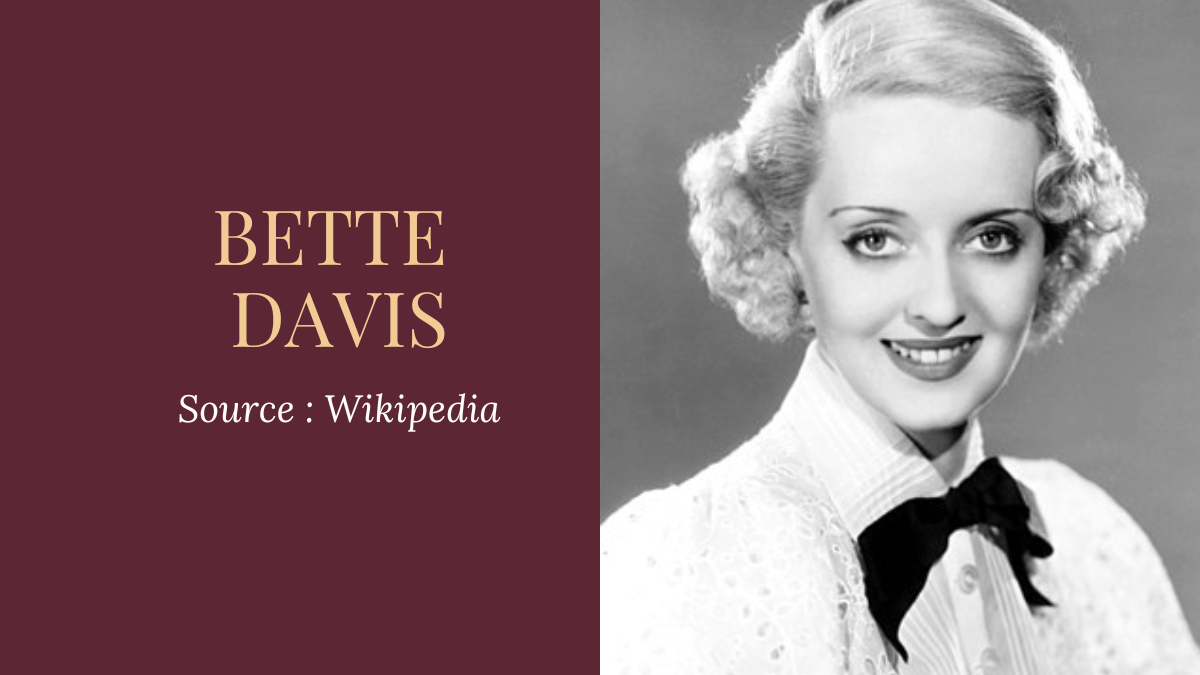
Introduction:
Bette Davis, born Ruth Elizabeth Davis on April 5, 1908, in Lowell, Massachusetts, was a fearless and iconic actress whose career spanned six decades. Renowned for her powerful performances and unwavering determination, Davis became a Hollywood legend and a trailblazer for women in the film industry. This article will explore Bette Davis’s profile, biography, date of birth, height, and touch upon the controversies that marked her remarkable life.
Biography:
Growing up in a broken family, Bette Davis discovered her love for acting during her time at Cushing Academy and later at John Murray Anderson’s Dramatic School in New York. Her talent quickly earned her roles on Broadway, leading to her eventual transition to Hollywood in the early 1930s.
Career and Rise to Fame:
Bette Davis’s breakthrough came with her performance in “Of Human Bondage” (1934), a role that earned her the first of her two Academy Awards. Known for her strong-willed characters and intense portrayals, Davis captivated audiences in films like “Jezebel” (1938), “Dark Victory” (1939), and “All About Eve” (1950), establishing herself as one of the greatest actresses of her time.
Notable Films and Achievements:
Davis’s career is marked by an impressive list of films, including “Dangerous” (1935), “The Letter” (1940), and “What Ever Happened to Baby Jane?” (1962). She received ten Academy Award nominations, winning for “Dangerous” and “Jezebel.” Bette Davis’s achievements also include being the first woman to receive the American Film Institute’s Lifetime Achievement Award.
Date of Birth and Height:
Bette Davis was born on April 5, 1908, making her an Aries. Standing at 5 feet 3 inches tall, Davis may not have been physically imposing, but her on-screen presence and formidable talent made her a giant in the world of cinema.
Controversies:
Throughout her career, Bette Davis was known for her outspoken and assertive personality, often clashing with studio executives over creative differences. One of the most significant controversies in her career occurred when she sued Warner Bros. in 1936 to break free from what she considered subpar film roles. This legal battle, although challenging, resulted in the creation of the “Davis Clause,” allowing actors to challenge their contracts after seven years.
Legacy:
Bette Davis’s impact on Hollywood transcends her time on the screen. Her courage to challenge the status quo and demand better roles for women paved the way for future generations of actresses. Davis’s legacy as a trailblazer, coupled with her extraordinary talent, solidifies her as an enduring figure in the history of cinema.